
TL;DR

Get movie nights delivered free with Prime
- Fast, free delivery on millions of items
- Prime Video, Amazon Music and more included
- Member-only deals all year
Chitai-Gorod–Bukvoed head Alexander Brychkin said the bookstore chain has spent about 100 million rubles in recent years removing books that may violate Russian law and disposing of some titles. He said books are taken off sale after the chain receives a notice raising suspicions, and that some titles remain in warehouse storage while their status is unresolved.
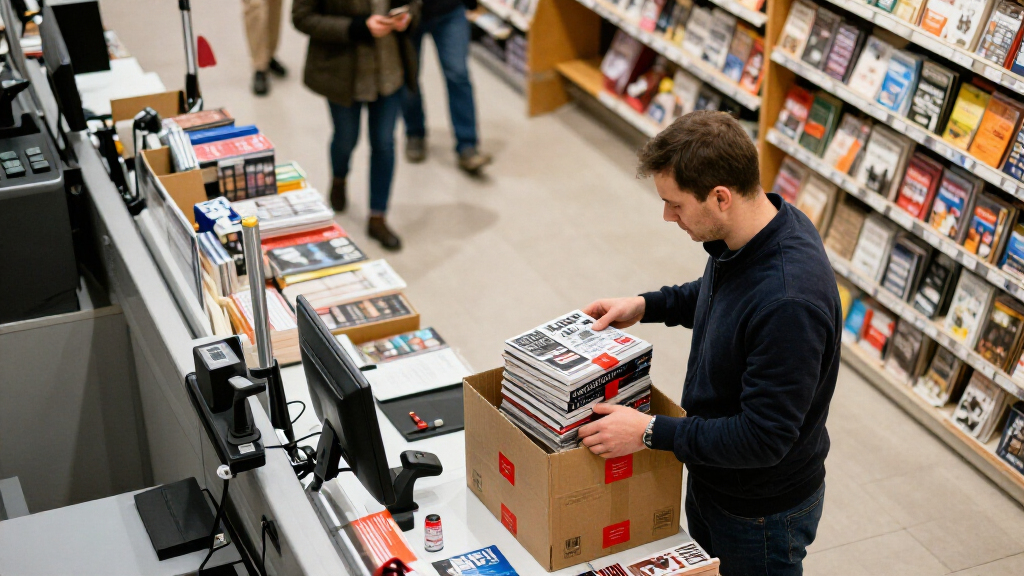
Chitai-Gorod–Bukvoed, described as Russia’s largest bookstore chain, has spent about 100 million rubles in recent years pulling books that may violate Russian law from sale and destroying them, its head, Alexander Brychkin, said in an interview with the business outlet RBC. His account details the financial and operational burden on the retailer as books are flagged for review, removed from shelves and, in some cases, shredded.
Brychkin said the chain incurs costs because it often cannot return the affected books to suppliers. The company must write them off, move them from shops to a warehouse and pay for processing and disposal, he told RBC. He described the work as involving substantial labor and expense, with no compensation for pulling books from shelves or transporting them.
Under the process he described, the chain receives a notice from the Russian Book Union saying there are suspicions about a particular title. The retailer then stops selling it “until clarity is reached,” Brychkin said. Disposal is handled by a service provider, which, according to his description, destroys books on camera with an industrial shredder.
Brychkin said the chain has not destroyed every title removed from sale. Some books by Boris Akunin, for example, remain in the warehouse because the company cannot return them to the supplier and has not disposed of them. He characterized the arrangement as a form of “special restricted storage.”
The Cost of Removing Books
The reported figure points to the direct costs borne by a major retailer when books are withdrawn, beyond the effect on authors and readers. Brychkin’s account includes unsold inventory, staff work, transport, warehouse handling and disposal, and indicates that the chain does not receive reimbursement for those expenses.
The process also shows how a notice raising suspicions can affect availability before the status of a book is settled. The chain’s stated practice is to halt sales while it waits for clarity, but Brychkin said that complete certainty may be difficult because other organizations could be conducting separate assessments. His remarks describe the company’s experience; they do not establish how every book is reviewed or whether each removal leads to a formal ban.
Popular right now

iRobot Roomba Max 715 Pet Robot Vacuum with AutoEmpty Dock

KitchenAid Artisan Series 5-Quart Tilt-Head Stand Mixer, Dried Rose (KSM150PS)

Vitamix Propel Series 510 Professional-Grade Blender, 3 Programs, Black
As an affiliate, we earn on qualifying purchases.
How Titles Are Flagged
Russian books have been withdrawn from sale in recent years following demands from authorities or pro-government organizations, according to the source report. The chain’s head described a process in which a notice from the Russian Book Union prompts the retailer to suspend sales. His comments do not specify the legal status of every book removed through this process, or whether all such removals follow the same route.
The report also cited an October 2026 decision by Russia’s media regulator, Roskomnadzor, to ban Olga Ptitseva’s novels The 203rd Day of Winter and The Spring of Water. Media reports said the ban may have been connected to alleged “promotion of non-traditional sexual relations.” That possible reason was reported as a claim, not established in Brychkin’s comments about the bookstore chain’s costs.
“We can’t just throw these books in the trash. They’re toxic waste.”
— Alexander Brychkin, head of Chitai-Gorod–Bukvoed, speaking to RBC
Which Books Remain in Storage
Brychkin did not provide a list of all titles removed, the number of copies involved, or a breakdown of the reported 100 million rubles by year or expense category. The source does not specify whether that total covers every removal or only books handled under particular procedures.
It is also unclear what criteria determine whether a title is ultimately returned to sale, sent back to a supplier or destroyed. Brychkin said the chain acts after receiving a notice of suspicions and waits for clarity, while acknowledging that reviews by other organizations may be underway. The status of the Akunin books still in storage was not described as resolved.
No Further Review Dates Given
Brychkin did not give a timetable for resolving the status of the books held in storage, nor did the report identify a scheduled next step for the chain’s review process. The retailer’s stated procedure is to stop selling a title after receiving a notice and keep it off sale until it has more clarity.
Further details would be needed to establish how many books have been affected, what proportion are eventually destroyed and whether the company expects its removal and disposal costs to change. The report provides no new announcement from the chain or Russian authorities about a revised policy.
Key Questions
How much has the bookstore chain spent?
Chain head Alexander Brychkin told RBC that Chitai-Gorod–Bukvoed has spent about 100 million rubles in recent years pulling books from sale and destroying them. He did not give a year-by-year breakdown.
Why does the chain remove books from sale?
Brychkin said the chain acts after receiving a notice from the Russian Book Union that there are suspicions about a title. It stops selling the book while awaiting clarity; the report does not establish that every flagged book has been formally banned.
How are books destroyed?
Brychkin said a service provider destroys books on camera using an industrial shredder. He also said the chain pays for disposal and related handling.
Are all books removed from sale destroyed?
No. Brychkin said some Boris Akunin books remain in the chain’s warehouse because they cannot be returned to the supplier and have not yet been disposed of.
Source: meduza.io