TL;DR

Get movie nights delivered free with Prime
- Fast, free delivery on millions of items
- Prime Video, Amazon Music and more included
- Member-only deals all year
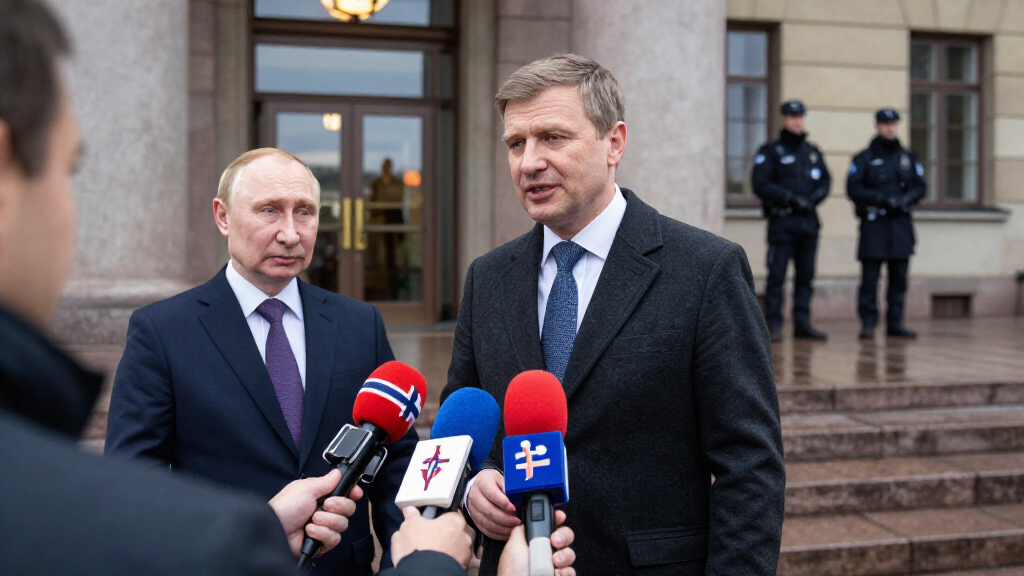
Norwegian Prime Minister Jonas Gahr Støre has denied a Financial Times report that Vladimir Putin discussed medieval Slavic history during an October 27 call with Støre and Finnish President Alexander Stubb. The FT says it stands by its reporting, leaving the accounts in conflict; Støre says Putin spoke about Europe after 2014.
Norwegian Prime Minister Jonas Gahr Støre has disputed a Financial Times report that Russian President Vladimir Putin discussed medieval Slavic history during an October 27 call with Støre and Finnish President Alexander Stubb. The FT says it stands by its account, leaving conflicting descriptions of a conversation that the paper reported focused heavily on Russia’s framing of the war in Ukraine.
Støre told Norwegian newspaper VG that he had asked the Financial Times to correct the report because, he said, its account was untrue. “We asked the Financial Times to correct this because it isn’t true. And they will correct it, because we took part in the conversation,” he said in the interview. The quoted remarks do not establish that the paper agreed to make a correction.
VG asked the FT for comment. A representative for the newspaper said it would not change the article, adding: “We stand by our journalism.” The FT’s response sets the paper’s account against the account of one of the call’s participants; the material available does not provide a transcript or a recording with which to independently resolve the disagreement.
In a separate appearance on NRK’s program Politisk kvarter, Støre gave another description of Putin’s remarks: he said the Russian president spoke about the situation in Europe after 2014. The FT had reported that Putin spent much of the call on what the Kremlin calls the “initial reasons for the conflict,” rather than addressing key questions about ending the war in Ukraine. The accounts differ over the content and emphasis of the call.
Conflicting Accounts of Ukraine Talks
The dispute matters because it concerns what Putin said in a conversation involving the leaders of Norway and Finland, two NATO members, about a war affecting European security. The FT’s account characterized the call as spending substantial time on the Kremlin’s explanation for the conflict rather than on ending it. Støre’s description places Putin’s remarks in a broader discussion of Europe after 2014, while rejecting the specific account of a medieval-history lecture.
Those differences affect how readers understand the purpose and tenor of the exchange. At this stage, neither the report nor Støre’s public account is accompanied in the source material by a detailed transcript. The disagreement is therefore a matter of competing descriptions, not a publicly documented word-for-word record.
Popular right now

iRobot Roomba Max 715 Pet Robot Vacuum with AutoEmpty Dock

KitchenAid Artisan Series 5-Quart Tilt-Head Stand Mixer, Dried Rose (KSM150PS)

Vitamix Propel Series 510 Professional-Grade Blender, 3 Programs, Black
As an affiliate, we earn on qualifying purchases.
What the October 27 Report Said
The Financial Times report, published a day before the dispute was reported by Meduza on October 29, said Putin gave Stubb and Støre a lecture on the history of the Slavs in the Middle Ages during their October 27 call. It also said Putin devoted much of the conversation to the Kremlin’s account of the origins of the war in Ukraine, rather than to key questions about how the fighting might end.
Meduza noted that Putin has made lengthy references to Russian history in other public or reported conversations, including a 2024 interview with Tucker Carlson and a meeting with Donald Trump in Alaska. That background does not independently confirm what Putin said in the October 27 call. The current disagreement is specifically about the FT’s account of this conversation and Støre’s rebuttal.
No Public Transcript Settles the Dispute
The accounts remain in conflict. Støre denies the FT’s description of a medieval-history lecture, while the newspaper says it stands by its reporting. The available source material does not include a transcript, recording, or detailed account from Stubb that would resolve the difference or establish how much of the call concerned each topic.
It is also unclear whether the FT will publish additional detail supporting its report, or whether Støre will provide a fuller account of the conversation. His comments on NRK that Putin discussed Europe after 2014 offer some description, but do not set out the exchange in full.
Whether Either Side Adds Detail
The immediate next step is whether the Financial Times or Støre provides further information about the call. The FT has told VG it will make no changes at this stage, while Støre has said he asked the paper to correct the report. No correction or additional evidence is reported in the source material.
Further statements from Stubb, either government, or the newspaper could clarify what was discussed. Until then, the central unresolved issue remains the difference between the FT’s account and Støre’s description, with no public transcript cited to settle it.
Key Questions
What did the Financial Times report about the call?
The FT reported that Putin discussed medieval Slavic history with Støre and Stubb during their October 27 call, and spent much of the conversation on the Kremlin’s account of the conflict in Ukraine.
What is Støre’s response?
Støre told VG the FT’s account was untrue and said he had asked the paper to correct it. On NRK, he said Putin spoke about the situation in Europe after 2014.
Has the Financial Times corrected its report?
No. A representative told VG: “We stand by our journalism.” The FT said it would not make changes.
Is there a public transcript of the conversation?
None is cited in the available source material. Without a transcript or recording, the competing descriptions of the call have not been independently reconciled.
When did the call take place?
The call took place on October 27, 2026, according to the reports. The dispute over the FT’s description was reported on October 29.
Source: meduza.io