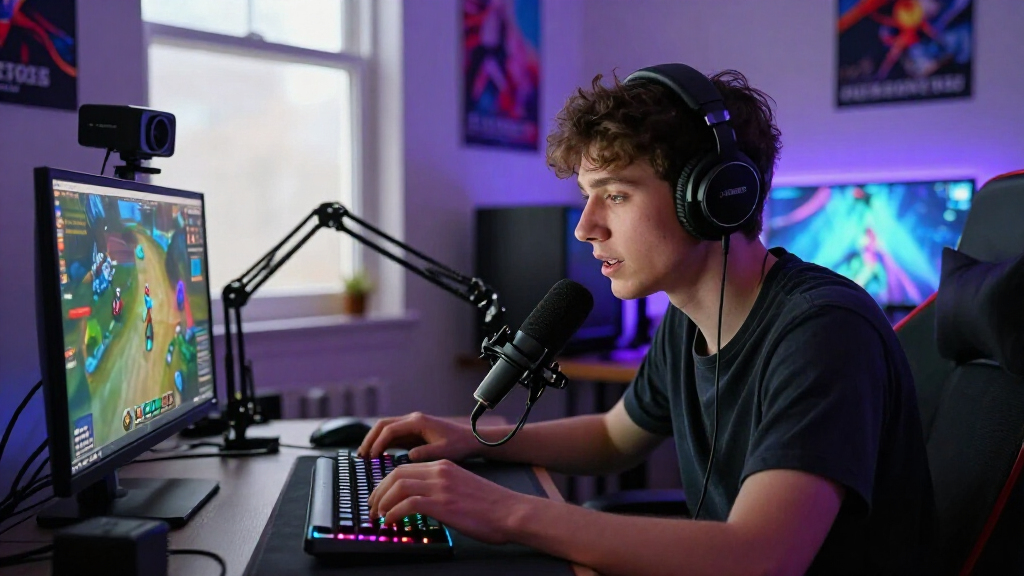

Choosing a gaming laptop for streaming is a balance between the game viewers see and the broadcast you have to run alongside it. RTX 4060 laptops and RTX 4080 laptops both support NVIDIA hardware encoding, so either can produce a capable stream without asking the processor to encode every frame. The bigger difference is how much performance remains for the game, overlays, browser sources, and recording when a demanding title pushes the system.

Get movie nights delivered free with Prime
- Fast, free delivery on millions of items
- Prime Video, Amazon Music and more included
- Member-only deals all year
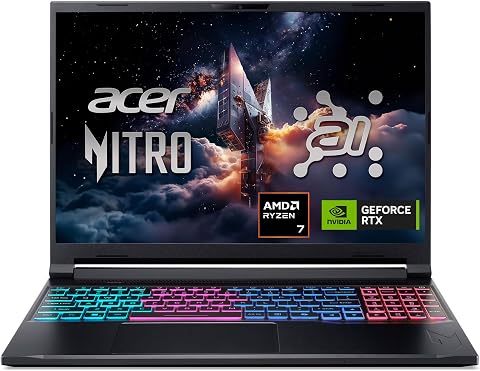
Acer Nitro V 16S AI Gaming Laptop, Ryzen 7 260, RTX 5060, 16-inch WUXGA 180Hz, 32GB RAM, 1TB SSD
- ✔ Processor: AMD Ryzen 7 260
- ✔ Graphics: NVIDIA GeForce RTX 5060 Laptop GPU, 8GB GDDR7
- ✔ Memory: 32GB DDR5-5600; stated maximum 32GB

ASUS ROG Strix G16 (2025) 16-Inch Gaming Laptop, Intel Core i7-14650HX, NVIDIA GeForce RTX 5060, 16GB DDR5, 1TB PCIe 4.0 SSD
- ✔ Processor: Intel Core i7-14650HX
- ✔ Graphics: NVIDIA GeForce RTX 5060 Laptop GPU, 8GB
- ✔ Memory: 16GB DDR5-5600; tool-free access

Acer Nitro V 15 Gaming Laptop, Intel Core i7-13620H, NVIDIA GeForce RTX 4050, 15.6-inch FHD 165Hz IPS, 16GB DDR5, 1TB SSD
- ✔ Processor: Intel Core i7-13620H
- ✔ Graphics: NVIDIA GeForce RTX 4050 Laptop GPU, 6GB GDDR6
- ✔ Memory: 16GB DDR5; maximum 32GB
An RTX 4060 laptop is the sensible starting point for 1080p gaming and streaming, especially when budget, portability, and power draw matter. An RTX 4080 laptop costs far more, but its extra graphics capacity can make a real difference at high settings, higher resolutions, and with demanding games. This comparison focuses on the complete laptop setup: the GPU is important, but cooling, memory, display, and the price of the whole machine also shape the result.
At a Glance
| Criteria | RTX 4060 gaming laptops | RTX 4080 gaming laptops | Winner |
|---|---|---|---|
| Streaming encode support | NVENC hardware encoding; suitable for common streaming workflows | NVENC hardware encoding; the same broad encoding advantage | Tie |
| Gaming headroom while live | Good for many games at 1080p, with settings adjustments in demanding titles | More room for high frame rates and demanding games while streaming | B |
| Resolution and graphics settings | Best fit for 1080p; 1440p can work with compromises | Better suited to high settings and 1440p or higher laptop displays | B |
| Price and overall value | Usually far less expensive; strong value for mainstream streaming | Premium pricing; worthwhile when the extra performance is used | A |
| Heat, fan noise, and power | Lower power class in many laptop designs, though cooling varies by model | Higher performance can mean more heat, fan noise, and power under load | Depends |
| Memory and upgrade priorities | 16 GB can work; 32 GB is preferable for heavier multitasking | 32 GB is a sensible target for a high-end streaming setup | Depends |
| Portability and laptop choices | More models and lower-cost configurations are available | Often found in larger, heavier, more expensive machines | A |
Acer Nitro V 16S AI Gaming Laptop, Ryzen 7 260, RTX 5060, 16-inch WUXGA 180Hz, 32GB RAM, 1TB SSD
The Nitro V 16S AI is the most balanced pick for someone who wants to game and stream without making an immediate memory upgrade. Its RTX 5060 is shared with the ASUS ROG Strix G16, but Acer includes 32GB DDR5 from the outset, compared with the ASUS’s 16GB. That gives us a more comfortable starting point for running a game, streaming software, chat, and browser tabs together. The Ryzen 7 260 provides the processing platform, although the supplied details do not include a direct performance comparison with the ASUS’s Core i7-14650HX.The 16-inch, 1920 x 1200 screen has a 180Hz refresh rate and 100% sRGB coverage. That combination makes it better equipped for fast gameplay and color-conscious everyday use than the Nitro V 15’s 15.6-inch 1080p panel, though the display itself does not determine stream quality for viewers. Acer also describes a quad-intake cooling design and a slim 4.6-pound chassis, a useful pairing for moving between locations. Its 65Wh battery and Wi-Fi 6 are more modest on paper than the ASUS’s 90Wh battery and Wi-Fi 7, and the listed memory ceiling means we cannot expand RAM beyond the 32GB already installed. Choose this model for the best out-of-box balance; skip it if your workload needs more than 32GB or you prioritize Wi-Fi 7.
Pros:
- RTX 5060 graphics with 8GB GDDR7
- 32GB DDR5 memory suits heavier multitasking at setup
- 16-inch 180Hz display with 100% sRGB coverage
- Slim 4.6-pound design and quad-intake cooling
Cons:
- 32GB is the stated maximum memory, leaving no RAM upgrade headroom
- Wi-Fi 6 rather than the ASUS ROG Strix G16’s Wi-Fi 7
- 65Wh battery is smaller than the ASUS’s listed 90Wh capacity
Best for: Streamers who want RTX 5060 graphics and 32GB memory in the laptop from day one.
Not ideal for: Buyers who need more than 32GB RAM, Wi-Fi 7, or a touch display.
Bottom line: We rank the Nitro V 16S AI first because it combines RTX 5060 graphics with the lineup’s strongest ready-to-stream memory configuration.
“We rank the Nitro V 16S AI first because it combines RTX 5060 graphics with the lineup’s strongest ready-to-stream memory configuration.”
ASUS ROG Strix G16 (2025) 16-Inch Gaming Laptop, Intel Core i7-14650HX, NVIDIA GeForce RTX 5060, 16GB DDR5, 1TB PCIe 4.0 SSD
The ROG Strix G16 is the performance-oriented alternative to Acer’s top-ranked Nitro. It combines an Intel Core i7-14650HX with RTX 5060 graphics, and its vapor chamber, three-fan cooling system, and liquid-metal thermal compound are explicitly designed around heat management. Those details make it appealing for buyers who expect sustained gaming sessions while broadcasting, though the specifications alone cannot tell us real-world temperatures or frame rates. Compared with the Nitro V 16S AI, ASUS starts with half the memory at 16GB, so its out-of-box configuration is less comfortable for a busy streaming setup.ASUS counters with practical flexibility: the RAM and SSD have tool-free access, which makes future upgrades less of a chore than a sealed design. Its 16-inch 1920 x 1200 display runs at 165Hz with a listed 3ms response time, close to Acer’s 180Hz panel but without the stated 100% sRGB coverage. Wi-Fi 7 and a 90Wh battery are advantages over the Nitro V 16S AI’s Wi-Fi 6 and 65Wh battery, although the supplied battery life is only two hours. At 2.65kg, it is also the heaviest of the three by listed weight. We would choose it when upgrade access, connectivity, and its Intel platform matter more than having 32GB installed immediately; buyers wanting a ready-to-go memory configuration should prefer the Nitro V 16S AI.
Pros:
- RTX 5060 graphics paired with Intel Core i7-14650HX
- Tool-free access to RAM and SSD for future upgrades
- Vapor chamber, three fans, and liquid-metal thermal compound
- Wi-Fi 7 and a 90Wh battery
Cons:
- Ships with 16GB RAM, below the Nitro V 16S AI’s 32GB
- Listed battery life is two hours
- At 2.65kg, it is heavier than either Acer option
Best for: Streamers who value accessible RAM and SSD upgrades, Wi-Fi 7, and a cooling system built for gaming workloads.
Not ideal for: People who want 32GB memory immediately, long unplugged sessions, or a lighter laptop.
Bottom line: The ROG Strix G16 is the upgrade-friendly RTX 5060 choice, provided we are willing to address its 16GB starting memory and keep it near a power outlet.
“The ROG Strix G16 is the upgrade-friendly RTX 5060 choice, provided we are willing to address its 16GB starting memory and keep it near a power outlet.”
Acer Nitro V 15 Gaming Laptop, Intel Core i7-13620H, NVIDIA GeForce RTX 4050, 15.6-inch FHD 165Hz IPS, 16GB DDR5, 1TB SSD
The Nitro V 15 is the sensible step-down option for streamers whose setup is usually at a desk and who can accept less graphics headroom. Its RTX 4050 with 6GB GDDR6 sits below the RTX 5060 GPUs in both 16-inch laptops, so buyers choosing between them should favor the more powerful graphics tier when demanding games and streaming workloads take priority. Acer pairs it with an Intel Core i7-13620H and 16GB RAM, expandable to 32GB. That upgrade path is helpful, but it means this configuration starts behind the Nitro V 16S AI’s 32GB for simultaneous game, broadcast, and background tasks.Where this model makes its case is connectivity and size. The Gigabit Ethernet port offers a direct wired-network option that neither 16-inch listing specifies, which can be useful when a consistent connection matters more than moving around. Thunderbolt 4 joins HDMI and four USB ports, providing flexible ways to connect peripherals and displays. Its 15.6-inch Full HD screen runs at 165Hz, but it has less workspace and lower resolution than the 1920 x 1200 panels on both 16-inch rivals. At 4.7 pounds it is not lighter than the Nitro V 16S AI despite its smaller screen. We would pick it for a budget-conscious, wired desk setup; buyers prioritizing graphics headroom or a larger 16:10 workspace should move up to one of the RTX 5060 models.
Pros:
- Gigabit Ethernet provides a wired networking option
- Thunderbolt 4, HDMI, and four USB ports support peripherals and displays
- 165Hz matte Full HD IPS display
- Memory can be expanded from 16GB to 32GB
Cons:
- RTX 4050 is a lower graphics tier than the RTX 5060 in the other picks
- Starts with 16GB RAM, while the top pick includes 32GB
- 15.6-inch 1920 x 1080 panel has less workspace than the 16-inch 1920 x 1200 screens
Best for: Desk-based streamers who want wired Ethernet, Thunderbolt 4, and a 15.6-inch high-refresh display.
Not ideal for: Buyers targeting demanding games alongside streaming, or anyone who wants 32GB memory without an upgrade.
Bottom line: The Nitro V 15 earns its place for wired connectivity and practical ports, but its RTX 4050 makes it the least capable gaming-and-streaming option in this group.
“The Nitro V 15 earns its place for wired connectivity and practical ports, but its RTX 4050 makes it the least capable gaming-and-streaming option in this group.”
As an Amazon Associate we earn from qualifying purchases.
Key Differences
The key distinction is headroom during a live broadcast. Both classes can use the GPU’s hardware encoder, which reduces the need to rely on CPU encoding. But encoding is only one part of the workload: the game still needs graphics resources, while streaming software may run alerts, scenes, browser sources, and local recording. An RTX 4060 laptop handles this combination well for many 1080p setups, but a demanding game may call for lower graphics settings or a frame-rate cap. The RTX 4080 gives those games more room to run without competing as tightly with the rest of the stream.
That extra capacity is most valuable when it changes what you can play or broadcast: high settings in demanding titles, higher-resolution gameplay, or simultaneous recording and streaming. It is less valuable if the stream is 1080p, the games are not especially demanding, or you already cap frame rates and tune settings. Laptop GPU performance also depends on the specific machine’s power limits and cooling, so a model name alone does not promise identical results across laptops.
Value usually favors the RTX 4060. Money saved can go toward 32 GB of memory, a better webcam or microphone, wired networking, or a larger SSD—items that improve the whole streaming setup. Pay the RTX 4080 premium when its performance headroom has a clear job in your games and target resolution, rather than buying it simply because a stream is involved.
Detailed Comparison
Streaming encode support (minor difference)
Both RTX 4060 and RTX 4080 laptops provide NVIDIA hardware encoding for common streaming workflows. This gives each a way to encode a broadcast without putting the entire encoding task on the CPU. Neither GPU has a categorical advantage here for a typical single-stream setup; the 4080’s higher gaming performance does not by itself make the stream visibly better. Encoder settings, the streaming platform, upload stability, and the source footage still matter.
Gaming headroom while live (RTX 4080 gaming laptops wins — major)
The RTX 4080 wins by a meaningful margin when a demanding game runs alongside streaming software. Its additional graphics capacity can preserve higher settings or frame rates while the system also handles scenes, alerts, and other background tasks. An RTX 4060 remains a practical option, but some games may need reduced settings or a frame-rate cap to keep play smooth. For less demanding titles, the practical gap can be smaller.
Resolution and graphics settings (RTX 4080 gaming laptops wins — major)
The RTX 4060 is most comfortable as a 1080p streaming and gaming choice. It can run some games at higher resolutions, but expectations should reflect the title and graphics settings. The RTX 4080 is the stronger fit for high settings and 1440p gaming while live, with more headroom to avoid compromising the game to protect stream performance. This matters most to people whose audience watches 1080p but who want to play on a sharper laptop display.
Price and overall value (RTX 4060 gaming laptops wins — major)
RTX 4060 laptops usually cost much less and can still produce a capable gaming stream, making them the better value for most 1080p users. The RTX 4080 premium buys gaming headroom, not a guaranteed improvement in stream quality. It is worth paying more if that headroom supports demanding games, higher resolutions, or recording while streaming. Otherwise, investing the difference in memory, storage, audio, or networking can improve the setup more directly.
Heat, fan noise, and power (RTX 4060 gaming laptops wins — moderate)
The RTX 4060 class generally has an advantage for a cooler, more efficient laptop setup, though the exact result depends on the chassis and power limits. A high-performance RTX 4080 laptop can draw more power and produce more heat and fan noise under sustained gaming. That can affect comfort during long streams and make microphone placement more important. A well-cooled 4080 laptop may manage its load effectively, so compare reviews of the specific models rather than assuming every machine behaves alike.
Memory and upgrade priorities (moderate difference)
Neither GPU makes memory irrelevant. A 16 GB system may be workable for a streamlined setup, while 32 GB gives more room for games, streaming software, browsers, and extra tools to run together. The RTX 4060 budget often leaves more room to buy that memory or a larger SSD. With an RTX 4080, check the configuration carefully: a premium graphics chip paired with limited memory or storage may be a poor fit for a multitasking stream. Laptop upgrade options differ by model.
Portability and laptop choices (RTX 4060 gaming laptops wins — moderate)
RTX 4060 laptops are available across a wider range of price and size points, giving buyers more flexibility to find a portable machine. RTX 4080 laptops are commonly positioned as high-performance systems, and their cooling needs can lead to larger or heavier designs. Neither class guarantees a particular weight or battery life, so check the exact laptop. If moving the machine frequently matters, compare complete models and their power adapters, not only GPU specifications.
RTX 4060 gaming laptops: Pros and Cons
Pros:
- Lower purchase cost leaves budget for streaming gear or upgrades.
- Capable of hardware-encoded streaming in common setups.
- A strong fit for 1080p gaming and streaming when settings are chosen carefully.
- More choice across price points and laptop sizes.
Cons:
- Less graphics headroom for demanding games while streaming.
- May need lower settings or a frame-rate cap in heavier titles.
- Less suited to high-resolution gaming at high settings.
RTX 4080 gaming laptops: Pros and Cons
Pros:
- More graphics capacity for demanding games during a live broadcast.
- Better fit for high settings and 1440p gameplay.
- More room for multitasking, recording, and maintaining game performance.
Cons:
- Substantially higher laptop cost, with no automatic improvement to stream quality.
- High-load use can bring more heat, fan noise, and power draw.
- Often paired with larger and heavier laptop designs.
Who Should Choose What
Choose RTX 4060 gaming laptops if:
- You mainly stream and play at 1080p.
- Your games are moderate in graphics demand, or you are comfortable tuning settings.
- You want to leave budget for 32 GB of memory, storage, audio, or other stream equipment.
- Portability and a lower total setup cost matter more than maximum graphics performance.
Choose RTX 4080 gaming laptops if:
- You play demanding games and want high settings while streaming.
- You want to game at 1440p or use a high-resolution laptop display without as many compromises.
- You plan to stream and record or run several demanding tools at once.
- You expect the additional performance to extend the laptop’s useful life for your workload.
Skip both if: You already own a capable desktop or laptop that meets your streaming needs, or your main bottleneck is upload reliability, audio, or lighting rather than game performance.
Value for Money
For most people starting a 1080p gaming stream, an RTX 4060 laptop is the better value. It supports hardware-encoded streaming and leaves more of the budget available for 32 GB of memory, a reliable microphone, storage, and network equipment. Those purchases can improve the viewing experience more than a faster GPU when the game already runs smoothly.
Pay more for an RTX 4080 when you can name the workload that needs its extra graphics capacity: demanding games at high settings, 1440p play, or streaming while recording and multitasking. In those cases, the higher price buys useful performance headroom. If your games are modest and the stream remains at 1080p, the premium is difficult to justify.
Final Verdict
For most gaming streamers, choose an RTX 4060 laptop. It is the more balanced purchase for 1080p play and streaming, and the savings can strengthen the rest of the setup. Choose an RTX 4080 laptop if demanding games, high graphics settings, 1440p gameplay, or simultaneous recording make performance headroom a priority and your budget can support it.
The biggest deciding factor is how demanding the game is at the resolution you want to play. The encoding capability is available in both classes; the 4080’s case rests on keeping the game and other tasks running comfortably at the same time. Compare laptop cooling, memory, and power limits alongside the GPU. If the 4080 premium would force compromises in those areas or in essential stream gear, the RTX 4060 is the clearer choice.
Frequently Asked Questions
Can an RTX 4060 laptop stream games well?
Yes. Its hardware encoder supports common streaming workflows, and the GPU can suit 1080p gaming and streaming. For demanding games, tune graphics settings or cap the frame rate if needed to keep gameplay smooth.
Will an RTX 4080 laptop make my stream look better?
Not automatically. Both GPU classes support hardware encoding. The RTX 4080 mainly helps keep demanding games running at higher settings or resolutions while the stream and other software are active.
Is an RTX 4080 worth the extra cost for streaming?
It can be worth the premium if you play demanding games at high settings, target 1440p, or stream and record at once. For a typical 1080p setup, an RTX 4060 laptop is usually better value.
How much memory should a streaming laptop have?
16 GB may work for a modest setup, but 32 GB provides more room for a game, streaming software, a browser, and other tools to run together. Check whether the specific laptop lets you upgrade its memory.