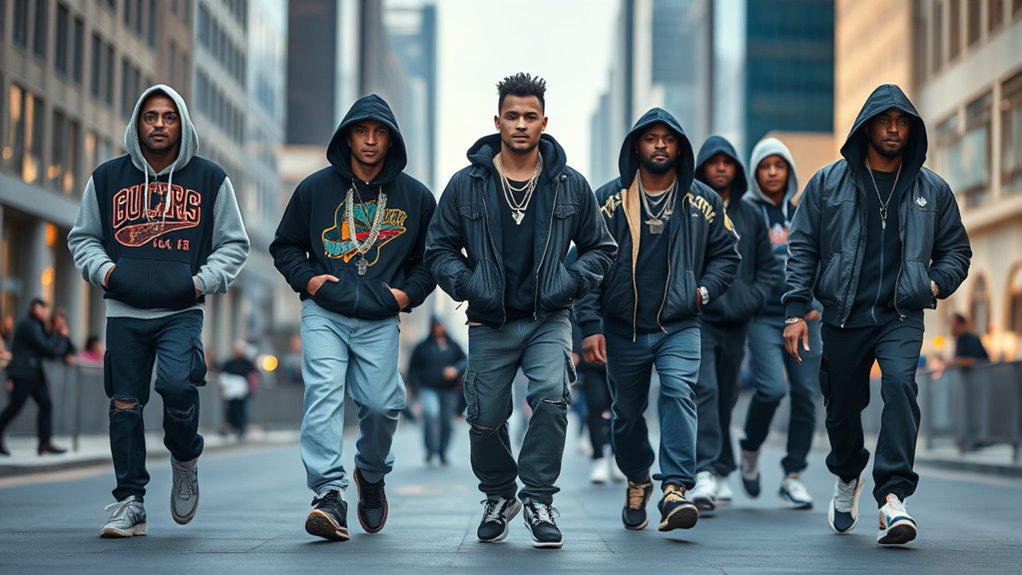

Hip-hop stars have completely transformed fashion by taking streetwear from urban streets to high-energy runways. Through iconic collaborations with brands like Nike, Adidas, and luxury houses, they’ve blurred the lines between casual and couture. Their bold looks—oversized silhouettes, graphic prints, and statement sneakers—now shape mainstream trends. If you want to explore how hip-hop continues to influence fashion’s future and redefine luxury norms, there’s much more to uncover.
Key Takeaways
- Hip-hop icons like Tupac and Biggie popularized streetwear staples such as oversized jeans and bold accessories, influencing high fashion aesthetics.
- Collaborations between hip-hop artists and luxury brands, e.g., Kanye West’s Yeezy and A$AP Rocky with Gucci, bridge streetwear and runway styles.
- Streetwear’s casual, bold elements like hoodies, sneakers, and graffiti motifs are now featured on high-fashion runways.
- Hip-hop culture’s emphasis on individuality and bold branding has shaped luxury collections and runway trends.
- Modern designers incorporate hip-hop-inspired street aesthetics, elevating urban styles into high fashion statements.
The Roots of Hip-Hop Fashion: 1980s and 1990s Pioneers
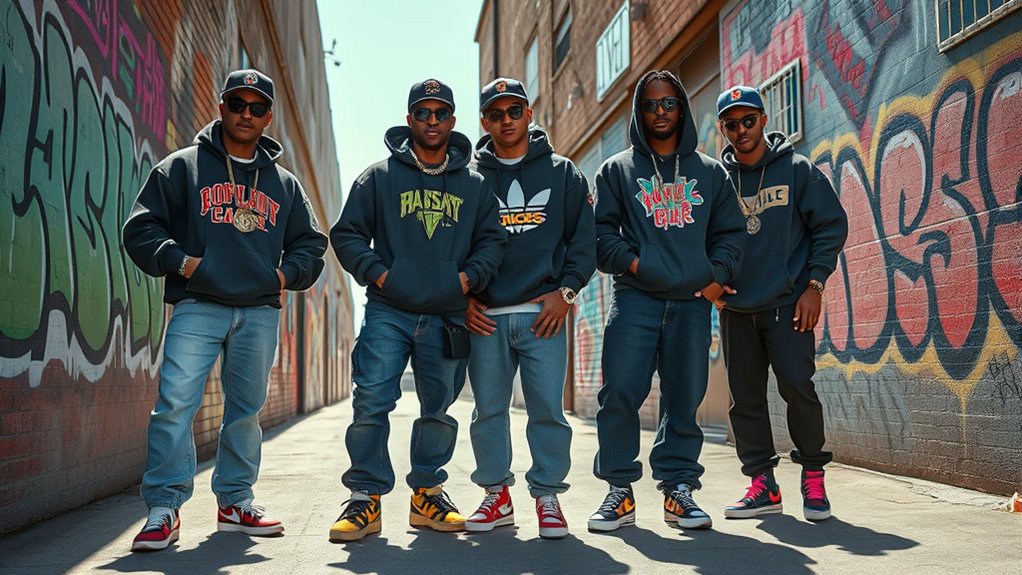
The roots of hip-hop fashion trace back to the late 1980s and early 1990s when artists and brands began blending street style with luxury influences. During this era, graffiti art became a visual hallmark, shaping the bold, vibrant aesthetics of the culture. Breakdancing also contributed to the fashion scene, inspiring oversized pants, athletic sneakers, and athletic wear designed for movement and flair. You’d see artists sporting baggy jeans, graphic t-shirts, and flashy accessories that reflected their urban environment. This period marked a transformation from purely streetwear to a fashion statement rooted in self-expression. These elements laid the foundation for hip-hop’s influence on mainstream fashion, creating a rebellious yet sophisticated style that continues to evolve today. Additionally, the incorporation of high-performance fabrics in clothing helped merge comfort with style, further elevating hip-hop fashion into the realm of high fashion.
Iconic Artist-Brand Collaborations Shaping Trends
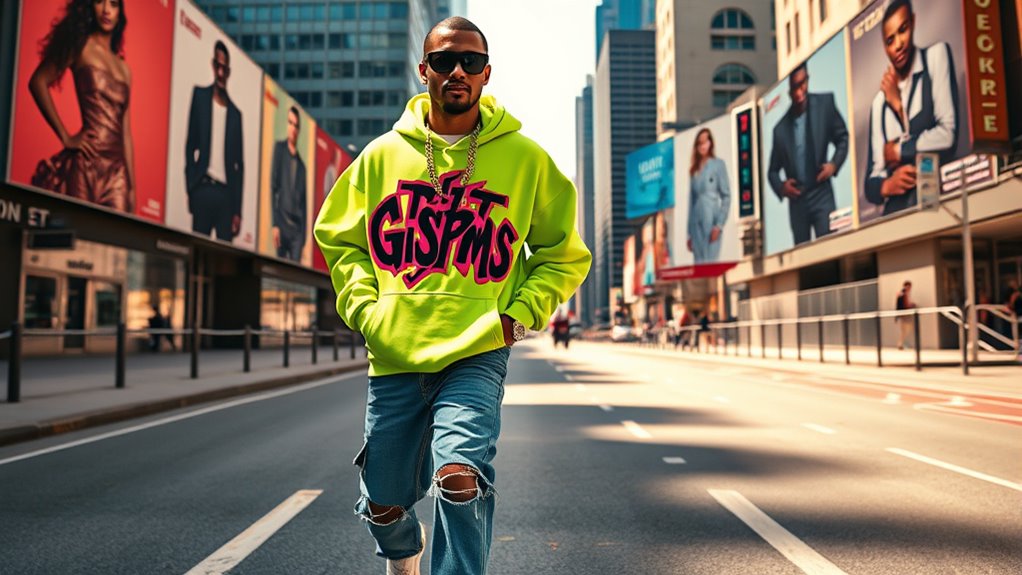
Iconic artist-brand collaborations have propelled streetwear into mainstream fashion by blending creative visions and cultural influence. You see how sneaker culture plays a pivotal role, with collaborations like Travis Scott and Nike elevating limited-edition sneakers to must-have status. Fashion icons like Kanye West and A$AP Rocky have transformed their personal brands into global phenomena through partnerships with Adidas, Gucci, and Dior, redefining what it means to be a fashion icon. These collaborations bridge the gap between streetwear and luxury, making high-end fashion more accessible and relevant. Artists leverage their cultural clout to influence trends, driving consumer demand and shaping industry standards. As a result, these collaborations fuel the ongoing evolution of fashion, making streetwear a dominant force on runways and in everyday style.
Additionally, the influence of pop culture in these collaborations continues to grow, further solidifying streetwear’s place in high fashion.
From Streets to High Fashion: Evolution of Style Aesthetics
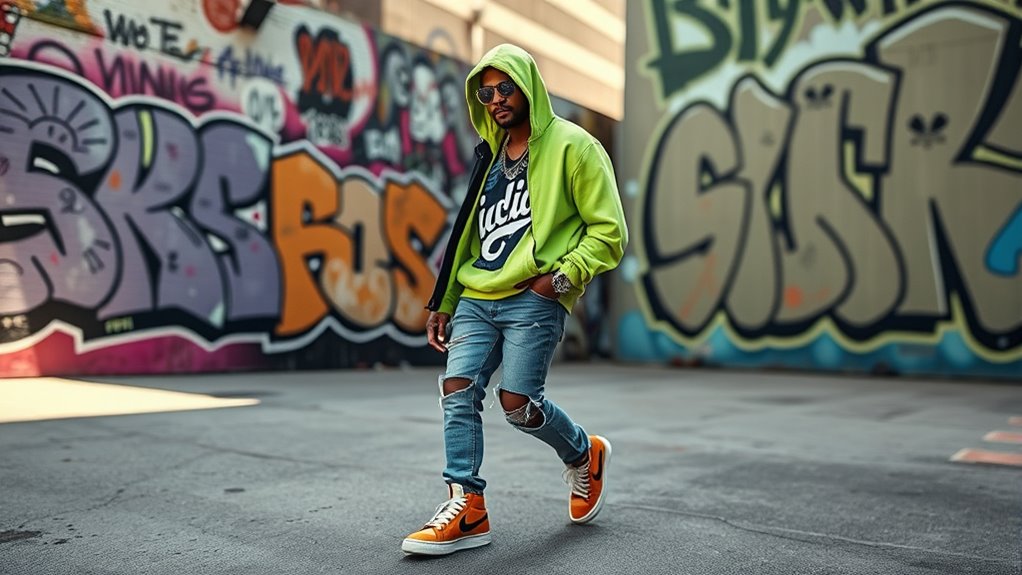
You can see how streetwear’s bold, casual styles have made their way onto high-fashion runways, blurring traditional boundaries. Designers now incorporate hoodies, sneakers, and oversized silhouettes into luxury collections, transforming everyday street aesthetics into couture statements. This evolution keeps fashion dynamic, with runway trends often originating from and influencing street style. Additionally, the rise of hip-hop-inspired fashion has played a significant role in shaping this crossover, reflecting the genre’s influence on contemporary style.
Streetwear’s Luxury Crossover
Streetwear’s journey from underground roots to high fashion runways exemplifies a seamless fusion of casual comfort and luxury aesthetics. You see this clearly in sneaker culture’s rise, where brands like Nike and Adidas became symbols of status and style, driven by hip-hop influence. Brand endorsements from artists like Kanye West and Travis Scott transformed sneakers into must-have luxury items, blurring the lines between streetwear and high fashion. High-end labels now incorporate oversized hoodies, sneakers, and jewelry into their collections, inspired by streetwear’s bold, relaxed vibe. This crossover isn’t just about style—it’s a strategic move to appeal to a broader, youthful audience. The collaboration between streetwear icons and luxury brands has redefined what it means to be fashionable, making luxury accessible and culturally relevant. Additionally, the integration of modern design elements into streetwear has helped elevate the aesthetic to appeal to high fashion sensibilities.
High-Fashion Influences Emerge
As high-fashion designers increasingly draw inspiration from street style, the boundaries between casual and couture continue to blur. You see luxury branding and art-inspired fashion merging seamlessly on runways, reflecting hip-hop’s cultural influence. Oversized silhouettes, bold jewelry, and sneaker-inspired footwear now feature prominently in luxury collections. Designers like Marc Jacobs and Louis Vuitton incorporate streetwear elements—hoodies, chains, and graphic prints—highlighting this shift. This evolution transforms urban aesthetics into high fashion statements, making street culture a core component of couture. You can spot this influence in the following table:
| Trend | Example |
|---|---|
| Luxury branding | Designer logos on sweatshirts |
| Art inspired fashion | Graffiti motifs on dresses |
| Oversized silhouettes | Baggy pants on runway |
| Sneakers as couture | Elevated sneaker designs |
Trends From Runway to Streets
Fashion runways increasingly showcase streetwear-inspired styles, blurring the lines between casual and couture. You’ll notice sneaker culture dominating high fashion, with designer collaborations elevating iconic kicks into luxury statements. Graffiti influence continues to shape aesthetics, inspiring bold prints, vibrant colors, and graphic designs on runway pieces. As these elements evolve to the streets, you see oversized hoodies, chunky sneakers, and graphic tees becoming everyday staples. The fusion isn’t just visual—it’s cultural, reflecting hip-hop’s impact on mainstream fashion. Designers draw from street art and sneaker obsession to create collections that resonate with urban energy. This movement transforms simple streetwear into high-fashion statements, making style more accessible and expressive while maintaining the edge that originally inspired it. Interior design principles like effective preparation and understanding client influences also play a role in shaping innovative fashion collections.
The Impact of Hip-Hop on Luxury Brand Integration

Hip-hop culture has profoundly reshaped the way luxury brands approach design and marketing, breaking down traditional boundaries between high fashion and streetwear. You see this influence in viral marketing strategies that leverage hip-hop’s massive online presence, making collaborations highly sought-after. Sneaker culture, rooted in hip-hop’s rise, has become a key element in luxury brand integration, with brands like Louis Vuitton and Dior partnering with artists to create exclusive sneaker lines. These collaborations generate buzz, boost brand visibility, and appeal to younger, style-conscious consumers. Hip-hop’s aesthetic and attitude now shape luxury collections, blurring lines between affordability and exclusivity. This synergy fuels a cultural shift, where streetwear’s authenticity elevates luxury, making it more accessible and culturally relevant. Additionally, the design innovation driven by this collaboration trend continues to push the boundaries of traditional high fashion.
Celebrity Entrepreneurs and the Rise of Artist-Owned Fashion Lines
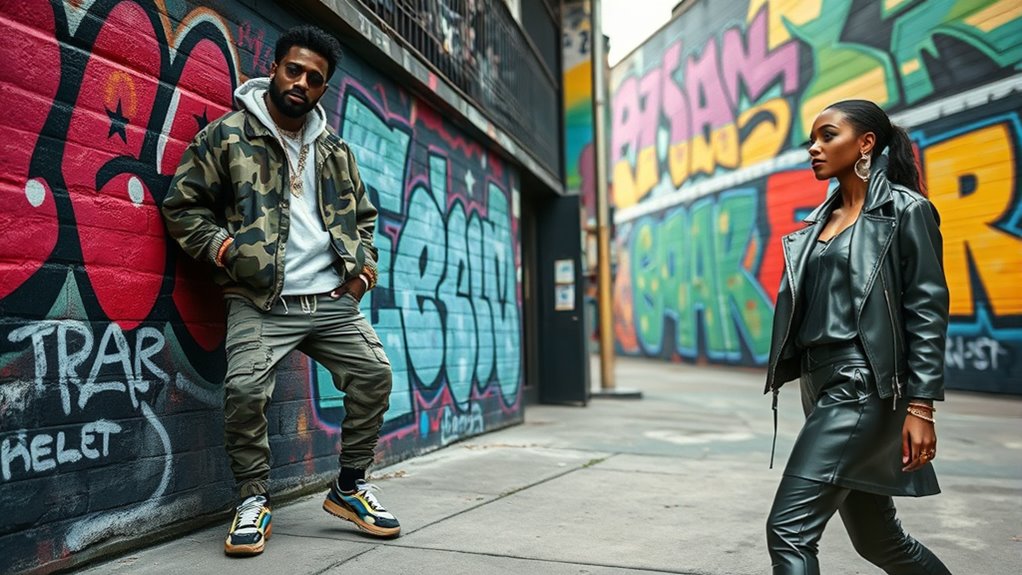
Celebrity entrepreneurs have revolutionized the fashion industry by launching their own brands and product lines, transforming their influence into lucrative business ventures. These artist-owned fashion lines leverage digital influence to reach global audiences instantly, fueling growth and brand loyalty. Many artists focus on fashion sustainability, implementing eco-friendly materials and ethical practices to appeal to conscious consumers. Their online platforms allow direct engagement, making it easier to launch limited editions or collaborate with established brands. This synergy of celebrity status and entrepreneurial spirit not only drives sales but also sets new standards for transparency and social responsibility. As a result, artist-led brands resonate with younger audiences seeking authenticity, while expanding hip-hop’s footprint in high fashion and sustainable design. Additionally, the rise of sustainable fashion within celebrity ventures highlights the growing importance of eco-conscious practices in the industry.
The Booming Market: Quantifying Hip-Hop’s Fashion Industry Influence
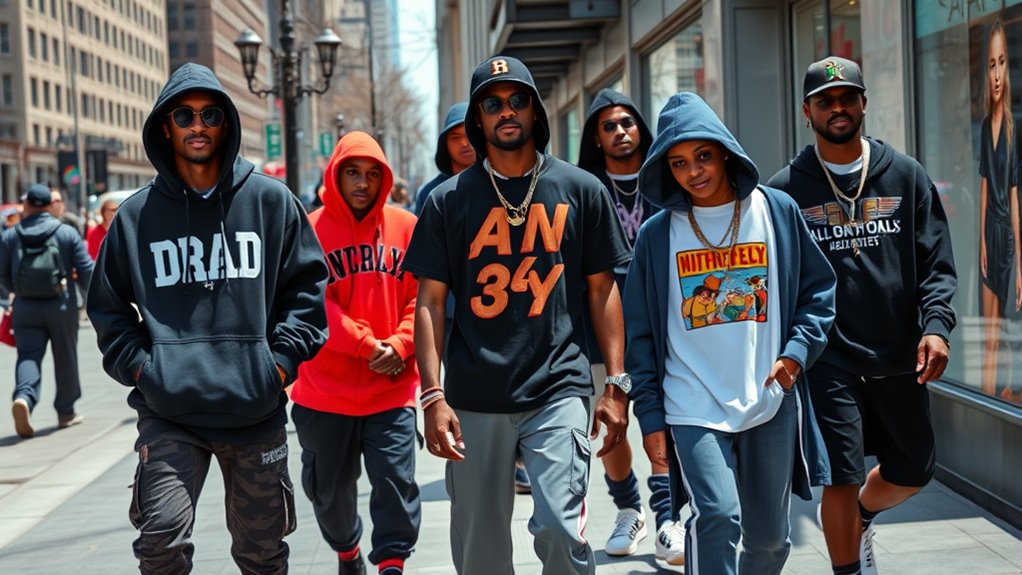
You can see hip-hop’s influence in the rapidly growing streetwear industry, which was valued at $185 billion in 2022 and is expected to reach $330 billion soon. Collaborations between artists and brands now generate over $2 billion annually, reflecting their strong market presence. This expansion shows how hip-hop’s fashion influence is reshaping industry share and driving significant revenue growth across the board. Additionally, the integration of personality traits into marketing strategies helps brands better connect with their target audiences.
Industry Valuation Growth
The streetwear industry has experienced explosive growth in recent years, with its valuation soaring from $185 billion in 2022 to an estimated $330 billion. This rapid expansion reflects how hip-hop’s influence continues to shape market dynamics. Vintage inspiration plays a significant role, as brands draw from retro styles to create fresh, sustainable collections that appeal to eco-conscious consumers. Streetwear sustainability has become a key focus, encouraging brands to adopt eco-friendly materials and ethical production practices. As a result, the industry’s valuation growth highlights not only the cultural power of hip-hop but also its ability to drive innovation and market adaptation. You can see how this evolving landscape solidifies hip-hop’s position as a major force in global fashion and industry valuation.
Revenue From Collaborations
Collaborations between hip-hop artists and major brands have become a driving force behind the booming revenue of the fashion industry. These partnerships generate billions annually, fueling the growth of digital fashion and emphasizing fashion sustainability through innovative products. For example, Kanye West’s Yeezy line with Adidas alone created over $1.7 billion in revenue, while Travis Scott’s Nike collaborations sold out instantly. Artist-brand collaborations often merge streetwear with luxury, appealing to a global audience. Here’s a snapshot of some key collaborations:
| Artist | Brand | Revenue Impact |
|---|---|---|
| Kanye West | Adidas/Yeezy | $1.7 billion+ |
| Travis Scott | Nike/Dior | Multi-million dollar sales |
| A$AP Rocky | Dior, Gucci | Global trend influence |
| Virgil Abloh | Off-White/LV | High-end streetwear |
| Sean Combs | Sean John | Billions since 1998 |
These partnerships shape both industry revenue and sustainable digital fashion trends. Notably, the influence of streetwear continues to expand its reach into high fashion, highlighting the evolving landscape of hip-hop’s impact.
Market Share Expansion
Hip-hop’s influence has dramatically expanded its share in the global fashion industry, transforming it into a multi-billion-dollar powerhouse. You see this growth clearly in sneaker culture, where collaborations between hip-hop artists and streetwear brands have skyrocketed sales and brand visibility. Major brands like Nike, Adidas, and Puma now regularly partner with hip-hop icons, fueling a surge in streetwear’s market share. These collaborations attract a diverse consumer base, blending streetwear brands’ authenticity with high-profile artist influence. As a result, hip-hop’s market share continues to expand, with streetwear brands dominating youth fashion and sneaker sales. This influence is evident in the increasing revenue from hip-hop-inspired collections, pushing the industry towards new levels of cultural and economic dominance. Additionally, market share expansion is driven by innovative marketing strategies that leverage social media and celebrity endorsements to reach broader audiences.
Signature Looks: How Hip-Hop Styles Transformed Mainstream Fashion
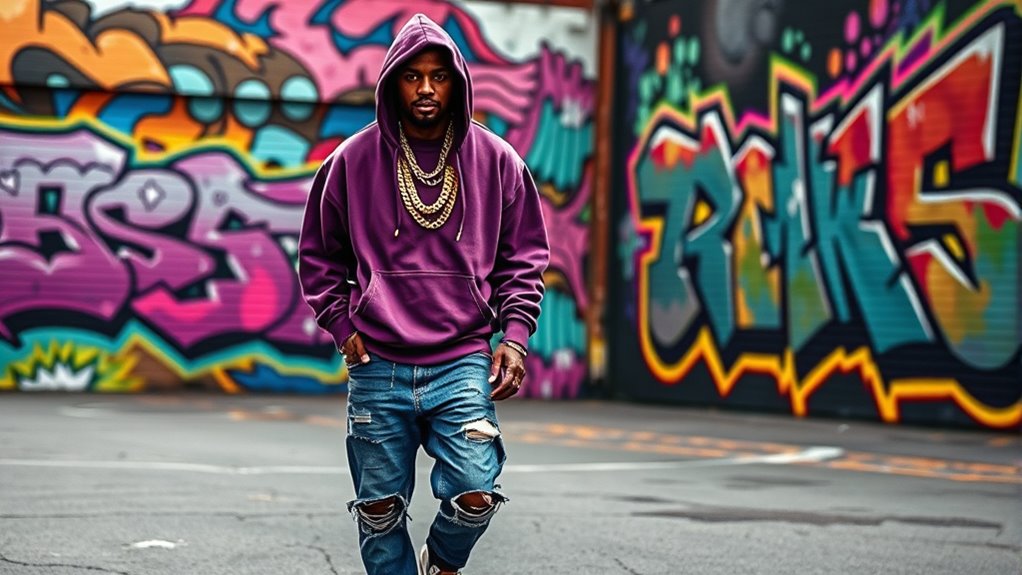
Hip-hop culture has considerably shaped mainstream fashion by popularizing bold, oversized silhouettes and eye-catching accessories that break traditional style norms. You see this in how sneaker culture exploded, with iconic brands like Nike and Adidas endorsing artists who turned sneakers into status symbols. Hip-hop artists introduced signature looks such as baggy pants, large gold chains, and statement hats, transforming streetwear into high fashion staples. These styles gained mainstream acceptance through brand endorsements and collaborations that blurred the lines between luxury and streetwear. Below, the visual impact of hip-hop’s influence is clear:
| Style Element | Example |
|---|---|
| Oversized Silhouettes | Baggy jeans, oversized hoodies |
| Jewelry | Gold chains, grillz |
| Sneakers | Air Jordans, Yeezys |
| Headwear | Trucker hats, bandanas |
| Accessories | Sunglasses, statement belts |
Key Moments in Hip-Hop and Streetwear Crossovers
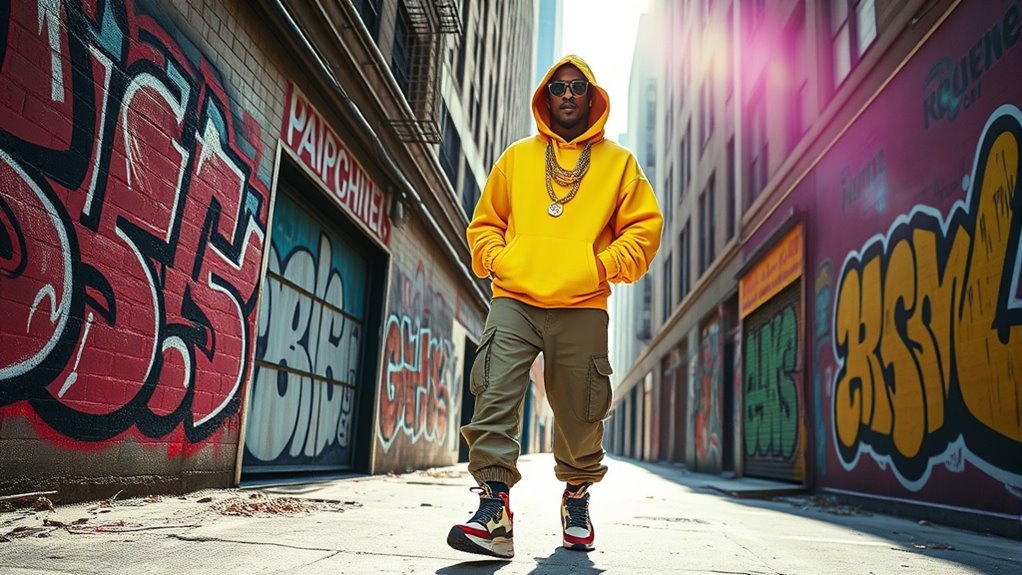
You’ve likely seen how Run-DMC’s groundbreaking Adidas partnership in the late 1980s set the stage for artist-brand collaborations. Then, artists like Tupac and Biggie brought luxury designers into streetwear, transforming how hip-hop influences fashion. Today, Kanye’s Yeezy line exemplifies how streetwear and high fashion continue to merge, shaping the modern industry.
Run-DMC’s Adidas Partnership
Run-DMC’s groundbreaking partnership with Adidas in 1986 marked a pivotal moment that bridged hip-hop culture and streetwear with mainstream fashion. You see, this collaboration helped popularize sneaker culture among a wider audience, making Adidas sneakers a symbol of authenticity and rebellion in hip-hop. Run-DMC’s endorsement of the Adidas Superstar without laces became iconic, showcasing how artists could influence consumer preferences directly. Their hit song “My Adidas” further cemented this relationship, turning brand endorsements into a cultural statement. This partnership didn’t just boost Adidas’ visibility; it set a precedent for future artist-brand collaborations, demonstrating how streetwear and music could intersect to create new market dynamics. It proved that music artists could shape fashion trends and influence sneaker culture on a global scale.
Tupac and Biggie’s Luxury Influence
During the 1990s, Tupac Shakur and The Notorious B.I.G. played pivotal roles in blending luxury fashion with streetwear, transforming how fans and brands perceived status and style. Tupac’s affinity for Versace and his frequent wearing of luxurious jewelry set a standard for luxury endorsements in hip-hop, emphasizing wealth as a symbol of success. Biggie popularized fashion iconography by showcasing Polo Ralph Lauren and Australian knitwear like Coogi, which became iconic in street culture. Their influence elevated luxury brands’ status within hip-hop, encouraging a fusion of high-end and street aesthetics. This crossover not only reshaped fashion narratives but also established a blueprint for future artists to leverage luxury endorsements, making style and status inseparable in hip-hop’s cultural and commercial landscape.
Kanye’s Yeezy Revolution
Kanye West’s Yeezy line has dramatically transformed the landscape of streetwear and high fashion by blending minimalist design with luxury appeal. You’re now immersed in sneaker culture, where Yeezy sneakers stand out as symbols of urban aesthetics and exclusivity. His innovative approach challenged traditional fashion boundaries, making high-end sneakers and clothing accessible yet aspirational. With sleek lines and neutral tones, Yeezy’s designs resonate with streetwear enthusiasts and luxury consumers alike, fueling a revolution that blurs the line between casual and couture. Kanye’s influence extends beyond footwear, inspiring collaborations that merge street-inspired grit with runway elegance. This revolution has redefined how you perceive fashion, turning everyday streetwear into coveted luxury items and cementing Yeezy’s role as a catalyst in the ongoing fusion of hip-hop, streetwear, and high fashion.
Cultural Icons and Their Enduring Style Legacies
Cultural icons have left an indelible mark on fashion, shaping trends that endure across decades. As style icons, they influence the cultural evolution of what’s considered stylish, blending streetwear with high fashion. You see their impact in the way oversized silhouettes, gold chains, and designer collaborations have become staples in mainstream and luxury markets. These icons—like Tupac, Biggie, and Run-DMC—broke barriers, turning everyday streetwear into symbols of status and identity. Their enduring legacies show how their personal styles transcend music, inspiring high-end brands and global trends. You can trace their influence in the continued popularity of signature accessories, bold branding, and street-inspired aesthetics that have become central to contemporary fashion’s evolution.
Future Trends: Hip-Hop’s Continuing Influence on Global Fashion
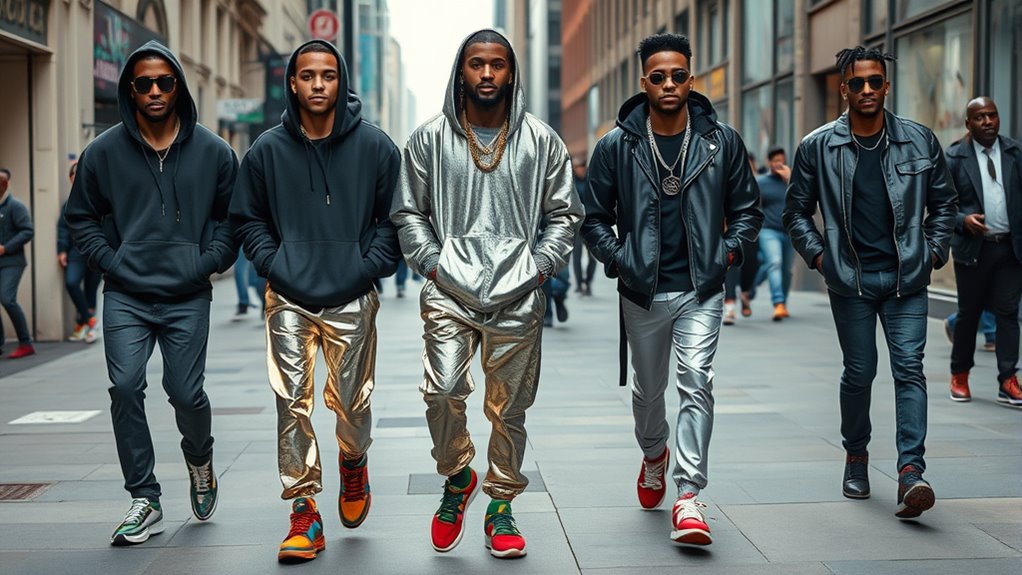
Hip-hop’s influence on global fashion shows no signs of slowing down; instead, it continues to shape trends and redefine luxury standards. Future fashion trends will focus on sustainability, with hip-hop artists advocating for eco-friendly materials and ethical production. Technological innovations, like augmented reality and digital fashion, will further blur the lines between streetwear and high fashion, making exclusive styles more accessible. Artists and brands will leverage these tools to create immersive experiences and limited-edition drops, boosting consumer engagement. As hip-hop culture evolves, expect to see an increased emphasis on sustainable practices paired with cutting-edge tech, ensuring its influence remains at the forefront of global fashion. This synergy will keep hip-hop’s style innovations fresh, relevant, and impactful worldwide.
Frequently Asked Questions
How Did Hip-Hop Influence the Development of Modern Streetwear Brands?
Hip-hop shaped modern streetwear brands by popularizing urban aesthetics and vintage logos, making them mainstream. You see artists and brands blending bold graphics, oversized silhouettes, and nostalgic symbols that reflect hip-hop’s influence. This cultural impact drives consumer demand for authentic, street-inspired fashion, inspiring brands to incorporate these elements into their collections. As a result, hip-hop’s style continues to evolve, shaping the identity and growth of modern streetwear.
What Role Do Collaborations Play in Blending Hip-Hop Culture With Luxury Fashion?
Remember, “the proof of the pudding is in the eating.” Collaborations play a essential role in blending hip-hop culture with luxury fashion through sneaker collaborations and celebrity endorsements. They create buzz, elevate brands, and make high-end styles accessible. You see artists partnering with top designers, turning streetwear into luxury, and appealing to a wider audience. These collaborations foster authenticity and cultural relevance, making the fusion both stylish and influential in today’s fashion scene.
How Have Hip-Hop Artists Transitioned From Musicians to Fashion Entrepreneurs?
You see how hip-hop artists have evolved from musicians to fashion entrepreneurs by leveraging brand endorsements and launching their own fashion lines. They capitalize on their cultural influence to create signature collections, collaborate with major brands, and build empires. This shift lets them shape trends, control their image, and generate substantial income, turning their music fame into long-lasting fashion legacies that resonate across industries.
What Are the Economic Impacts of Hip-Hop Fashion on Global Markets?
You see how hip-hop fashion boosts global markets through market expansion and increased consumer spending. The industry valued at $185 billion in 2022 is projected to grow further, driven by collaborations and cultural influence. Hip-hop merchandise alone generates over $2 billion annually, highlighting its economic power. As consumer spending rises on streetwear and luxury brands inspired by hip-hop, it fuels brand collaborations and elevates the industry’s overall market value.
How Will Hip-Hop Continue Shaping Future Fashion Trends Worldwide?
You can expect hip-hop to keep shaping future fashion trends through ongoing cultural evolution and stylistic innovation. As new artists emerge, they’ll blend streetwear with high fashion, pushing boundaries and inspiring global styles. Collaborations with luxury brands will deepen, making street-inspired looks more mainstream. This continuous cycle of cultural influence and creative experimentation guarantees hip-hop’s role as a driving force in shaping innovative, diverse, and dynamic fashion trends worldwide.
Conclusion
Just like a vibrant mural that keeps evolving, hip-hop’s influence on fashion isn’t fading. You’ve seen how streetwear has become haute couture, blending bold styles with luxury. As you watch this movement grow, remember it’s a dynamic force, shaping trends and inspiring new generations. Hip-hop’s style is like a unstoppable wave, forever transforming and pushing boundaries in the world of fashion.