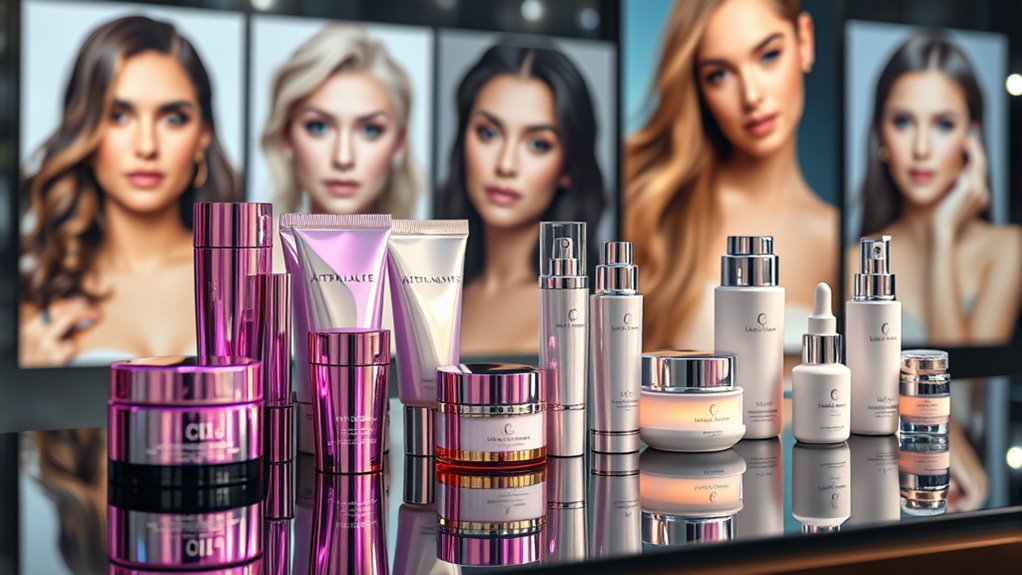

By 2025, celebrity beauty brands like Fenty Beauty, Rare Beauty, and Kylie Cosmetics lead the industry with a focus on inclusivity, sustainability, and authenticity. These brands increasingly connect with consumers through social media, emphasizing transparent ingredients and self-care values. Emerging labels from Hailey Bieber and Lady Gaga continue to push boundaries with eco-friendly packaging and minimalist aesthetics. To discover how these brands are shaping the future of beauty, keep exploring what’s behind their success.
Key Takeaways
- Fenty Beauty, Rare Beauty, and Kylie Cosmetics remain leading brands, driven by social media influence and diverse product offerings.
- Emerging brands like Rhode and Haus Laboratories focus on transparency, inclusivity, and sustainability to stand out.
- Celebrity brands are increasingly emphasizing authenticity, self-care, and eco-friendly practices to meet evolving consumer values.
- Social media continues to be a primary platform for engagement, product launches, and building loyal communities.
- Industry trends highlight a shift toward sustainability, diversity, and brand values shaping future market leadership.
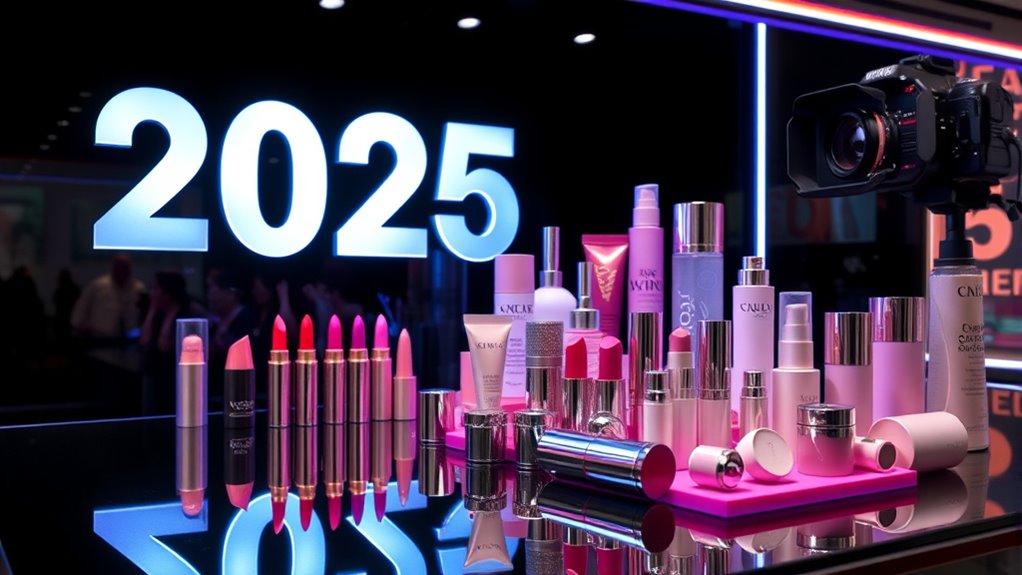
Have you noticed how celebrity beauty brands are reshaping the industry by 2025? These brands have become major players, transforming how consumers view beauty products and influencing retail landscapes worldwide. Fenty Beauty by Rihanna leads the charge, boasting an estimated revenue of $600 million and a valuation close to $3 billion. Its focus on inclusivity, offering over 50 foundation shades, has set new standards for diversity in cosmetics. With a presence in more than 1,500 retailers globally, including Sephora and Boots, and an Instagram following of 12.5 million, Fenty Beauty’s reach is vast. Its eco-friendly packaging and community-driven campaigns resonate with consumers who prioritize sustainability and authenticity. Fenty Beauty’s groundbreaking formulas and sustainability focus have influenced many new brands to adopt eco-conscious practices. Meanwhile, Rare Beauty by Selena Gomez has carved out its niche with around $400 million in revenue and a valuation of $2 billion. The brand is celebrated for its mental health advocacy, emphasizing authentic self-expression and well-being. Available in over 1,200 stores such as Sephora and Cult Beauty, Rare Beauty connects deeply with a loyal audience of 8.7 million Instagram followers. Its lightweight, buildable formulations like the Soft Pinch Liquid Blush highlight a commitment to creating accessible, inclusive makeup options that reflect modern values of transparency and self-care. Additionally, brand differentiation has become essential for standing out in a crowded market, prompting brands to innovate and prioritize unique selling points. Kylie Cosmetics, founded by Kylie Jenner, also generates approximately $400 million in revenue and is valued at $1.2 billion. It leverages Jenner’s massive social media influence to maintain relevance among younger consumers. Her strategic use of influencer marketing and personal branding keeps her brand at the forefront of digital beauty trends, enabling rapid product launches and strong consumer engagement. Kylie’s social media dominance ensures her brand remains a staple in the competitive celebrity beauty space. Other brands like Anomaly Hair Care by Priyanka Chopra Jonas are gaining ground with a focus on eco-friendly and affordable luxury hair products. With around $542.7 million in revenue, Anomaly emphasizes sustainability and clean ingredients, reflecting shifting consumer preferences toward eco-consciousness. Emerging brands such as Rhode by Hailey Bieber and Haus Laboratories by Lady Gaga are also making waves, blending luxury with innovative design and minimalist aesthetics. These brands prioritize transparency, inclusivity, and sustainability—traits that consumers increasingly demand. Social media continues to be the primary driver for these brands, fueling product launches, community engagement, and brand loyalty. From Fenty’s powerful community-building to Rare Beauty’s mental health messaging, celebrity brands are no longer just about star power—they’re about aligning with core consumer values. As sustainability, inclusivity, and authenticity take center stage, celebrity beauty brands are shaping the future of the industry in bold, innovative ways.
Frequently Asked Questions
How Do Celebrity Beauty Brands Influence Mainstream Beauty Standards?
You see, celebrity beauty brands reshape mainstream standards by promoting diversity, inclusivity, and new ideals. They challenge traditional notions of beauty, inspiring you to embrace different skin tones, features, and styles. With their wide reach, these brands set new trends and influence what’s considered attractive. As you follow these brands, you’re encouraged to see beauty as more varied and authentic, ultimately shifting cultural norms and expanding your idea of what’s beautiful.
What Are the Most Sustainable Practices Among Celebrity Beauty Brands?
You want to know the most sustainable practices celebrity beauty brands use. They focus on transparent communication about their environmental impact, often blending education and content optimization. Many highlight eco-friendly packaging like refillable or recyclable containers and source ingredients ethically. Celebrity collaborations amplify these messages, boosting awareness. Consistent, credible sustainability content helps build trust, while innovations in packaging and ingredient sourcing meet rising consumer demands for safer, more responsible beauty products.
Which Celebrity Beauty Brands Have the Highest Market Growth Projections?
Think of this like a race where some brands are sprinting ahead. You’ll find Fenty Beauty by Rihanna leading with a projected 2025 revenue of $600 million, thanks to its focus on inclusivity. Rare Beauty by Selena Gomez and Kylie Cosmetics are also close, each hitting around $400 million. These brands grow fast because they connect emotionally with consumers, innovate constantly, and leverage social media, making them the top contenders in the market.
How Do Celebrity Beauty Brands Impact Independent Beauty Startups?
Celebrity beauty brands considerably impact independent startups by dominating market share, making it tough to gain visibility and shelf space. You’ll find it challenging to compete with their large marketing budgets, influencer reach, and exclusive distribution channels. Their focus on inclusivity, transparency, and innovation raises consumer expectations, pushing you to innovate authentically and differentiate your brand. Without similar resources, it’s harder to build trust, engagement, and loyalty in a crowded, competitive landscape.
What Partnerships or Collaborations Are Upcoming for Top Celebrity Brands?
You might think these collaborations are random, but they’re strategic, boosting brand relevance. Upcoming partnerships include Jenna Ortega with Dior, emphasizing bold elegance, and Olivia Rodrigo with Lancôme, targeting younger audiences. Expect high-budget campaigns blending storytelling and innovation. Celebrities like Gracie Abrams and Win Metawin are also joining brands like Hourglass and Shiseido, expanding reach across generations and regions, ultimately shaping the future of luxury and mainstream beauty markets.
Conclusion
As you step into 2025, imagine yourself surrounded by shimmering bottles and sleek packaging, each representing a star’s unique touch. These celebrity beauty brands transform your daily routine into a glamorous experience, turning ordinary moments into radiant self-care rituals. With their innovative formulas and star-studded appeal, you’re invited to embrace your own star power. So, get ready to glow brighter than ever, because this year’s top brands make beauty feel like your personal runway.