By 2025, Hollywood has made some progress in increasing diversity, especially on streaming platforms that promote inclusive stories. However, setbacks persist, such as underrepresentation of BIPOC and women in leading roles and behind the scenes. Systemic biases and funding gaps still hinder true progress. If you’re curious how industry efforts are evolving and what challenges remain, you’ll find plenty of insights as you continue exploring.
Key Takeaways
- Hollywood has made limited progress in authentic diversity representation, with setbacks in funding and casting for underrepresented groups by 2025.
- Streaming platforms have advanced inclusive storytelling, but traditional Hollywood still lags behind societal demographic shifts.
- Gender disparities persist behind the scenes, with women and minority creators facing barriers to leadership and creative roles.
- Industry efforts to improve diversity remain underfunded and insufficient compared to the growing BIPOC population.
- Progress is hampered by systemic biases and stereotypes, risking ongoing underrepresentation despite increased awareness.
Recent Trends in Racial and Ethnic Diversity in Hollywood Films
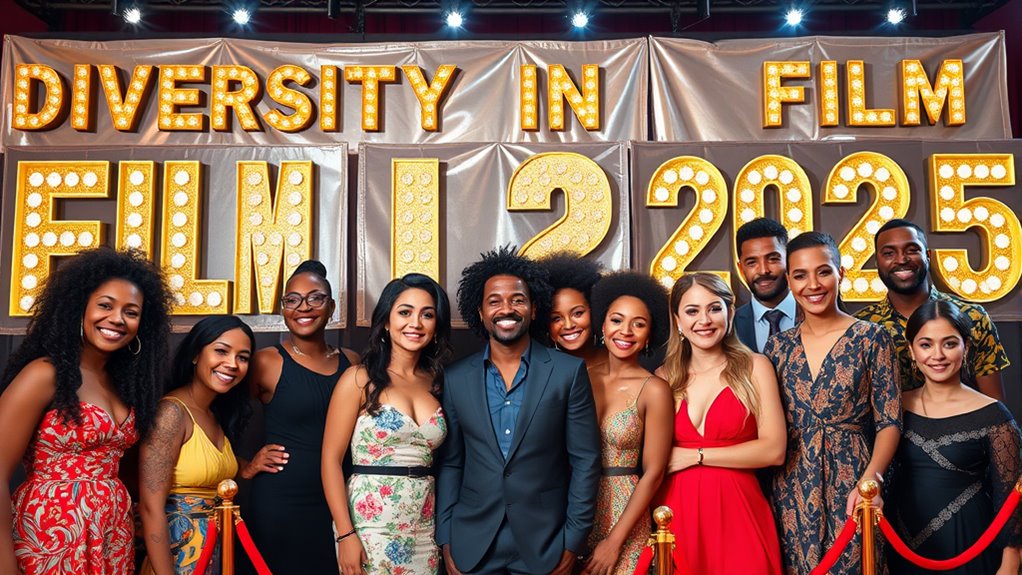
Despite growing awareness of the importance of diversity, recent data shows Hollywood’s racial and ethnic representation in films has declined. You might notice that cultural stereotypes still influence how characters from different backgrounds are portrayed, shaping audience perceptions in limiting ways. Films with diverse casts, which perform well at the box office, are increasingly replaced by productions featuring chiefly white actors. This shift suggests that Hollywood’s commitment to authentic representation is waning, impacting how audiences perceive underrepresented groups. When cultural stereotypes dominate, they reinforce misconceptions rather than challenge them. As a viewer, you’re affected by these portrayals, which shape societal attitudes and perceptions about race and ethnicity. The decline highlights the ongoing struggle to balance commercial success with meaningful, stereotype-free narratives. Additionally, efforts to improve diversity in casting are often hindered by industry biases and systemic barriers.
Representation of Underrepresented Groups in Leading Roles
Underrepresented groups continue to face significant barriers when it comes to securing leading roles in Hollywood films. Despite some progress, intersectional equity remains elusive, as cultural stereotypes often influence casting decisions. You’ll notice that BIPOC actors, women, and performers with disabilities are still underrepresented in top billing, especially in large-budget productions. Stereotypes about certain groups persist, limiting opportunities and reinforcing narrow portrayals. While streaming platforms have increased diversity behind and in front of the camera, Hollywood’s traditional system struggles to reflect societal demographics. This ongoing imbalance hampers authentic representation and perpetuates misconceptions. Recognizing the importance of casting diversity, Hollywood must dismantle stereotypes and prioritize casting that accurately reflects the diverse experiences and identities of underrepresented groups in leading roles.
Gender Dynamics Behind and In Front of the Camera

You might notice that women still face a significant gender gap both in front of and behind the camera, with fewer opportunities for leading roles and creative control. Female directors often hit budget ceilings around $50 million, limiting their ability to tell bigger stories. Meanwhile, women remain underrepresented behind the scenes, which affects the diversity of perspectives shaping Hollywood’s future. Implementing mindful decluttering strategies can help organizations prioritize and amplify underrepresented voices, fostering a more inclusive industry.
Gender Gap in Casting
Gender dynamics in Hollywood reveal a persistent gap both on and off the screen. The gender disparity in casting remains stark, with men overwhelmingly dominating leading roles, especially in big-budget films. This casting imbalance limits opportunities for women and non-binary actors, perpetuating stereotypes and reducing diversity. Despite some progress, women still hold a minority of top roles and behind-the-camera positions, and their stories are underrepresented. The industry’s focus on male-led blockbusters continues to skew gender representation, reinforcing a cycle that’s hard to break. Although streaming platforms have begun to diversify casting, the theatrical landscape remains heavily male-centric. To truly close the gender gap in Hollywood, systemic changes are essential to guarantee equal opportunities and authentic representation for all genders both in front of and behind the camera. Incorporating sound design techniques into storytelling can also enhance the portrayal of diverse experiences, making narratives more immersive and inclusive.
Female Directors’ Budget Limits
Despite growing awareness of the need for diversity, female directors face significant budget limitations that hinder their ability to produce large-scale projects. The persistent budget disparity means women often work with smaller budgets, restricting their creative control and the scope of their vision. This financial gap limits access to high-profile projects, making it harder for female directors to command the budgets necessary for blockbuster productions. As a result, they’re often confined to lower-budget films, which impacts their career growth and influence in Hollywood. The unequal funding perpetuates a cycle where female directors have less bargaining power, reinforcing gender disparities behind the camera. Addressing these budget disparities is essential for expanding creative control and ensuring women have equal opportunities to lead major projects.
Underrepresentation Behind Camera
Women remain markedly underrepresented behind the camera in Hollywood, both in creative roles and leadership positions. Industry funding heavily favors male-led projects, making it harder for women to secure the resources needed for larger productions. This funding imbalance limits opportunities for women to take on roles like directors, writers, and producers, reinforcing a cycle of underrepresentation. Despite some progress, women still face significant barriers in gaining creative leadership, especially for high-budget films. The lack of diverse voices in decision-making positions impacts the stories told and the opportunities available. As long as industry funding and leadership remain skewed, underrepresentation behind the camera will persist, hindering Hollywood’s efforts to reflect real-world diversity and inclusive storytelling. Additionally, trustworthiness of production companies and their commitment to supporting diverse talent can influence the overall progress toward representation.
Industry Challenges Hindering Diversity Initiatives
Industry challenges substantially hinder diversity initiatives in Hollywood, often rooted in entrenched systemic biases and financial incentives that prioritize white-led projects. Industry funding remains skewed toward productions with mainly white casts and creative teams, limiting opportunities for BIPOC storytellers. Political influence further complicates efforts, as conservative pushback against what’s labeled as “woke” content discourages studios from investing in diverse stories. This environment discourages risk-taking on projects that feature underrepresented voices, reinforcing existing power structures. Despite evidence that diverse films perform well at the box office, these barriers persist. Without addressing the underlying biases in funding and the political climate, Hollywood struggles to make meaningful progress toward authentic inclusivity and representation. Additionally, a reliance on philosophical exploration about authenticity and ethical decision-making can inspire industry stakeholders to reevaluate values and foster genuine inclusion.
Streaming Platforms: A Beacon for Inclusive Storytelling
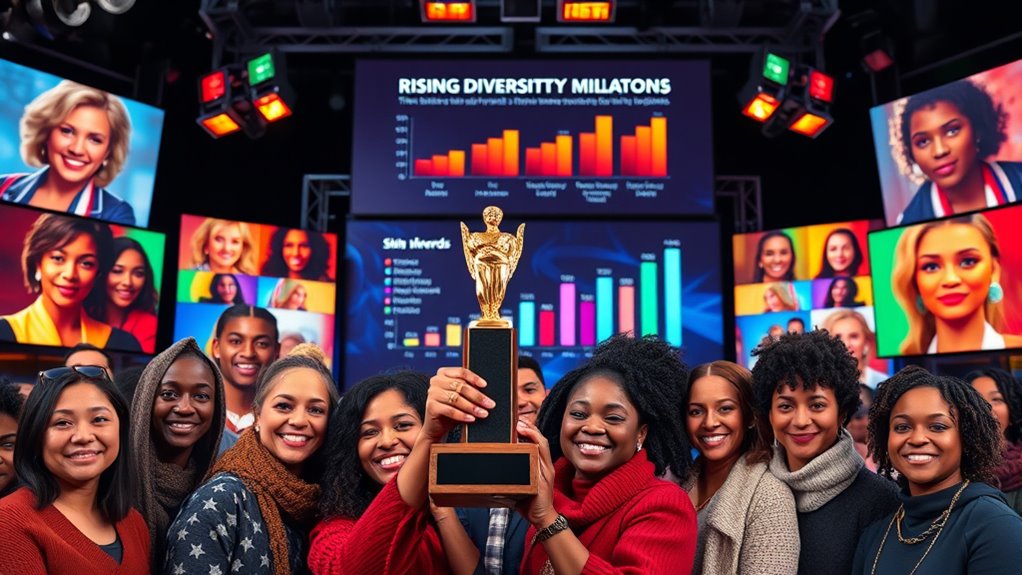
Streaming platforms have emerged as a crucial space for advancing inclusive storytelling in Hollywood. Their streaming innovation allows diverse voices to reach broader audiences, boosting engagement with underrepresented narratives. Many platforms now prioritize content featuring BIPOC and women creators, fostering more authentic stories. This shift helps challenge industry biases and expands representation behind and in front of the camera. Additionally, streaming services provide a flexible environment for experimenting with genre diversity, encouraging more innovative and varied storytelling approaches.
Demographic Shifts and Their Impact on Hollywood’s Future
As the U.S. population continues to shift toward a majority BIPOC makeup over the next two decades, Hollywood faces increasing pressure to reflect these demographic realities on screen. Cultural shifts highlight a growing demand for authentic representation, influencing audience perceptions and expectations. If Hollywood doesn’t adapt, it risks alienating core demographics that now drive box office success and streaming engagement. While society becomes more diverse, industry efforts lag behind, with current representation levels far below demographic realities. This disconnect may reinforce stereotypes or perpetuate underrepresentation, threatening future growth. To stay relevant and competitive, Hollywood must embrace demographic shifts, recognizing that diverse storytelling aligns with audience values and shapes perceptions. Failing to do so could undermine long-term industry sustainability and cultural relevance. Incorporating diverse casting and narratives is essential for authentic representation and audience engagement.
Key Opportunities and Obstacles Moving Forward

Despite recent setbacks, there are still significant opportunities for Hollywood to advance diversity and inclusion in the coming years. Addressing representation gaps and overcoming cultural biases can liberate new creative potential and market growth. Here are some key opportunities:
Hollywood still has vital chances to boost diversity and unlock new creative and market potential.
- Foster equitable access by supporting diverse talent pipelines behind and in front of the camera.
- Challenge cultural biases by promoting authentic storytelling that reflects society’s demographic shifts.
- Invest in diverse projects with budgets that match their audience reach, breaking the cycle of underfunding.
- Leverage streaming platforms to showcase more inclusive casts and creative teams, broadening representation.
- Implement transparent policies based on comprehensive privacy practices to build trust with diverse audiences and creators.
Frequently Asked Questions
What Specific Policies Are Hollywood Studios Implementing to Boost Diversity?
Hollywood studios are implementing policies like studio quotas to guarantee diverse hiring across casts, crews, and leadership roles. They also require mandatory diversity training for staff and executives to foster inclusive storytelling. These policies aim to address underrepresentation of BIPOC, women, and marginalized groups, encouraging equitable opportunities and creating a more diverse industry landscape that better reflects the demographic realities and audience preferences.
How Does Audience Reception Influence Diversity Efforts in Hollywood?
You should know that audience feedback and social media influence heavily shape Hollywood’s diversity efforts. When viewers support diverse stories, box office success and online praise boost studios’ motivation to include more representation. Conversely, negative comments or boycotts can stall progress. This direct feedback loop makes studios pay close attention to audience preferences, encouraging them to prioritize diversity to meet demand and stay competitive in today’s dynamic entertainment landscape.
Are There Successful Case Studies of Increased Diversity in Major Films?
Yes, there are successful case studies showing increased diversity in major films. You can look at movies like “Black Panther” and “Crazy Rich Asians,” which boosted representation metrics and showcased diverse storytelling. These films proved that authentic diversity enhances audience engagement and box office success. By prioritizing inclusive casting and narratives, Hollywood demonstrates that diversity storytelling isn’t just socially essential but also commercially effective.
What Role Do Film Festivals Play in Promoting Inclusivity?
Think of film festivals as gateways to a vibrant garden of inclusivity. They play a vital role by showcasing diverse stories and talents, acting as symbols of change. Through impact-driven inclusivity initiatives, festivals challenge industry norms, elevate underrepresented voices, and foster connections. This dynamic environment pushes Hollywood toward broader representation, inspiring filmmakers and audiences alike to embrace a richer, more equitable cinematic landscape.
How Are Emerging Filmmakers From Underrepresented Groups Gaining Industry Access?
You can see emerging filmmakers from underrepresented groups gaining industry access through mentorship programs and financial support. These initiatives connect you with experienced industry professionals, helping you develop your craft and navigate funding opportunities. Grants and crowdfunding also provide essential financial backing, enabling you to produce projects that reflect your unique voice. As these supports grow, your chances to break into Hollywood and tell diverse stories improve markedly.
Conclusion
By 2025, Hollywood has made notable strides, with over 40% of leading roles now held by underrepresented groups. This shift shows your industry’s growing commitment to diversity, yet challenges remain. As streaming platforms boost inclusive storytelling, you’ll see even more representation shaping the future. Remember, change is a journey—your support and awareness can help push Hollywood toward even greater progress, making stories more authentic and relatable for everyone.